Cloisonné Workshop
in Beijing, China
Duration
2–3 hours
Group Size
1–4 people
Best Time
Morning (9 AM – 12 PM, when artisan energy is highest)
What You'll Experience
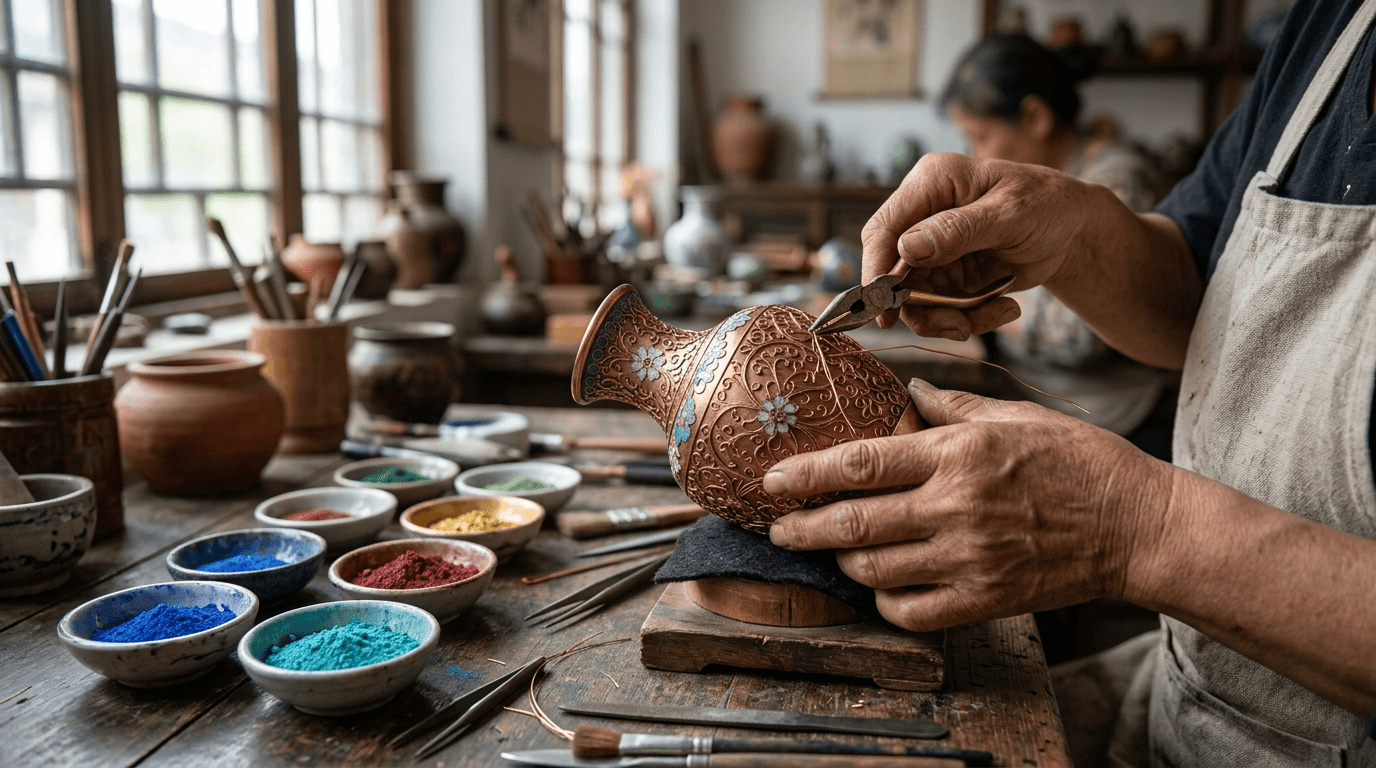
For 600 years, the workshops surrounding the Forbidden City have produced the intricate enamel-and-copper masterpieces that furnished imperial palaces: cloisonné, Beijing's most treasured folk art form. In a heritage workshop in the Longfu Temple area, a third-generation artisan walks you through every step of a process that demands patience, precision, and a willingness to work slowly. You'll twist fine copper wire into floral and geometric patterns — a technique called filigree filling — then carefully fill each enclosed cell with colored enamel paste using a miniature dropper. After firing and polishing, the result is a small vase or plate that glows with an intensity that seems lit from within. Nothing you buy in any souvenir shop will come close to something made by your own hands in three hours.
Highlights
- Twist copper wire into traditional floral and geometric filigree patterns
- Fill each cell with brilliant enamel paste in up to 10 classic colors
- Fire and polish your piece to a luminous, professional finish
- Learn why cloisonné was reserved for imperial use for centuries
- Take home your finished piece — a unique, hand-crafted souvenir
What's Included
- All materials: copper base, wire, enamel, tools
- Master artisan instruction throughout
- English-speaking companion for translation
- Firing and finishing of your piece
- Velvet gift box for your finished work
Meeting Point & Area
A heritage craft workshop near Longfu Temple, Dongcheng district, a 5-minute walk from Dongsi subway station (Lines 5/6). Address confirmed after booking.
Why Book with iGo2China
The workshops open to tourists are often production-line demos where you add one step to a pre-made piece. We work with a genuine artisan family where you complete the full process. The difference in pride you feel holding the finished piece is unmistakable. Your companion provides running commentary on the art form's history and the workshop's legacy.
What cloisonné is and why Beijing is its home
Cloisonné — known in Chinese as 景泰蓝 (jǐng tài lán, literally 'Jingtai blue' after the Ming emperor whose reign perfected the technique) — is the art of fusing colored enamels onto a metal base partitioned by fine copper wires. Originally a Byzantine technique that traveled the Silk Road, it was refined in 15th-century Beijing into something the Chinese imperial court recognized as uniquely their own. For 600 years, the workshops surrounding the Forbidden City produced the cloisonné that furnished imperial palaces.
Beijing remains the world center of cloisonné. The technique is practiced commercially almost nowhere else, and the few remaining family workshops are concentrated in the same Dongcheng neighborhoods where they have always been. A cloisonné workshop in Beijing is one of the few traditional crafts you can not just observe but actually complete — start to finish — in a single session.
What you'll make
Each guest produces one finished piece — typically a small vase, plate, or pendant, depending on the time available and your patience. The piece is yours to take home. It comes with a velvet gift box and the artisan's signature on the base.
The full process has six stages: copper base preparation (done in advance), filigree (you twist fine copper wire into a pattern and glue it onto the base), enamel filling (you fill each enclosed cell with colored enamel paste using a miniature dropper), firing (the artisan handles this in a small kiln), polishing, and final inspection. You complete stages 2 and 3 yourself; the artisan handles the rest while you watch.
What's included
From $30 per person, the workshop includes all materials (copper base, wire, enamel paste, tools), instruction from a third-generation master artisan, your English-speaking companion who handles translation and explains the cultural context, firing and finishing of your piece, and a velvet gift box for transport home. There are no hidden fees and no upsells on the day.
How this differs from tourist demos
The 'cloisonné experience' offered at tourist factories is a 15-minute production-line demo where you add one decorative step to a piece that's 80% pre-made, then watch a sales pitch in a showroom. We don't work with those factories. Our partner is a genuine three-generation family workshop where you complete the full filigree and enamel work yourself. The pride you feel holding the finished piece is the difference.
Where the workshop happens
The workshop is near Longfu Temple in Dongcheng district, a 5-minute walk from Dongsi subway station (Lines 5 and 6). The exact address is shared after booking — the workshop is on the second floor of a small heritage building and isn't easy to find without directions. Your companion meets you outside Dongsi station to walk you in.
How long does a cloisonné workshop take?
Plan for 2.5 to 3 hours. Filigree takes about 45 minutes for a beginner — the wire-twisting is delicate and unhurried work. Enamel filling takes another 45 minutes to an hour depending on how detailed your design is. Firing and polishing add 30 minutes. Most guests find the time passes faster than they expected; the work is meditative.
Best time of day
Mornings — 9 AM to 12 PM — are the best time. The artisan's energy and attention is highest, the workshop light is good, and you finish in time for lunch in the surrounding Dongsi hutong restaurants. Afternoon sessions are also possible but tend to feel more rushed against closing time.
Combining with other Beijing experiences
Cloisonné pairs naturally with other heritage-craft and cultural experiences. We commonly bundle it with a Forbidden City visit (the cloisonné workshop is a 20-minute walk from the north gate), a hutong walking tour of the surrounding Dongsi neighborhoods, or a Hanfu photoshoot in the same district on a different day. A cloisonné morning followed by a tea ceremony afternoon is a particularly satisfying single-day cultural arc.
Is cloisonné a good souvenir?
It's the souvenir most guests tell us they wish they'd bought more of. The pieces are small, durable, light to pack, and visibly hand-made. Unlike anything you can buy at the airport, your piece carries the small imperfections that prove a human made it — and those imperfections are what make it a story rather than a knick-knack.
Frequently Asked Questions
How much does a cloisonné workshop in Beijing cost?
From $30 per person. Includes all materials, master artisan instruction, your English-speaking companion, firing and finishing of your piece, and a velvet gift box.
How long does the cloisonné workshop take?
About 2.5 to 3 hours: 45 minutes filigree (wire-twisting), 45–60 minutes enamel filling, plus 30 minutes for firing and polishing while you watch.
Where is the cloisonné workshop located?
In a heritage workshop near Longfu Temple in Dongcheng district, a 5-minute walk from Dongsi subway station (Lines 5 and 6). The exact address is shared after booking.
Do I keep the piece I make?
Yes — your finished piece is fired, polished, signed, and presented in a velvet gift box for you to take home the same day.
Is the workshop suitable for beginners or children?
Yes. The artisan adjusts the design complexity to your skill level. Children aged 8+ can complete simplified pieces with help.
What's the difference between this and a tourist factory demo?
Tourist factories give you a 15-minute decorative step on a pre-made piece, then a sales pitch. Our partner is a genuine three-generation family workshop where you complete the full filigree and enamel work yourself.
More Experiences in Beijing
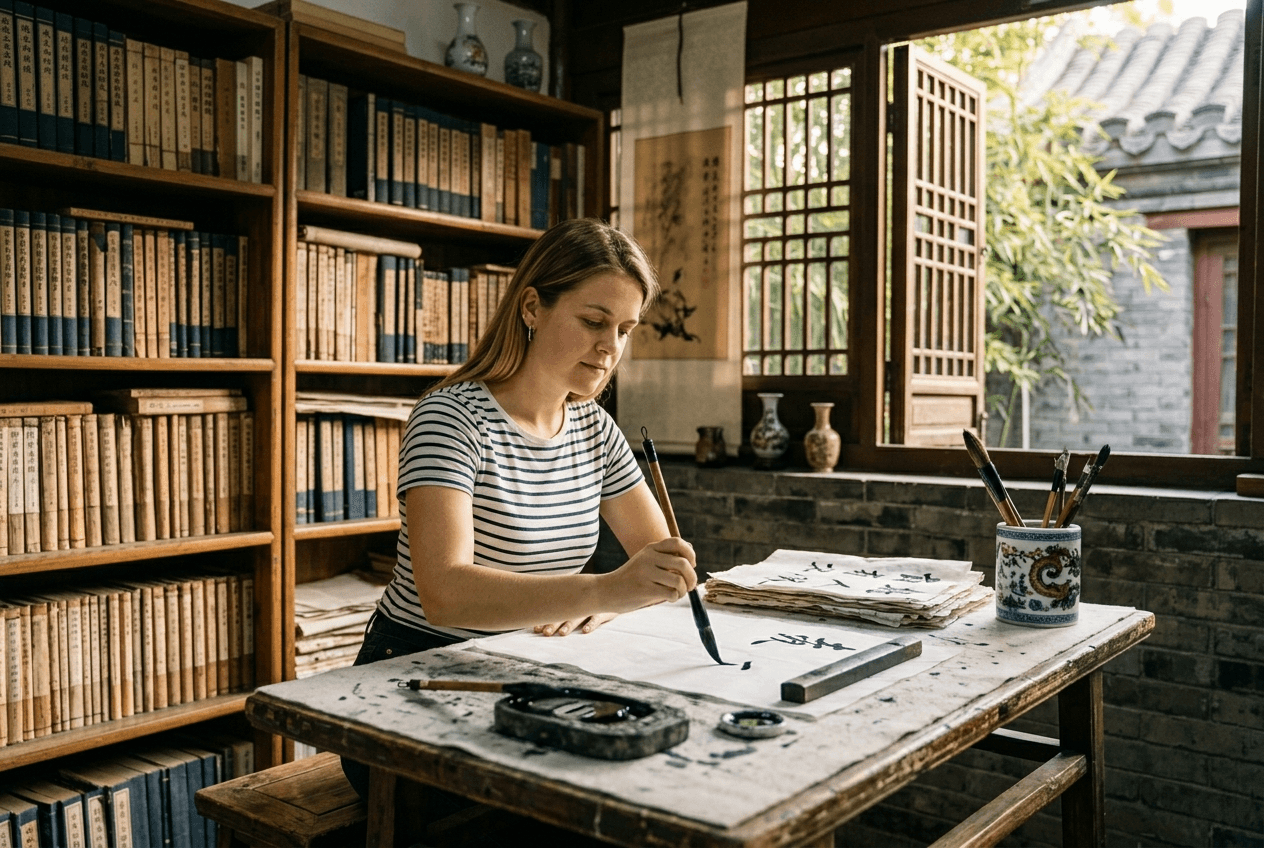
Chinese Calligraphy Workshop
Master the art of brush strokes with a patient local teacher in a traditional courtyard studio.
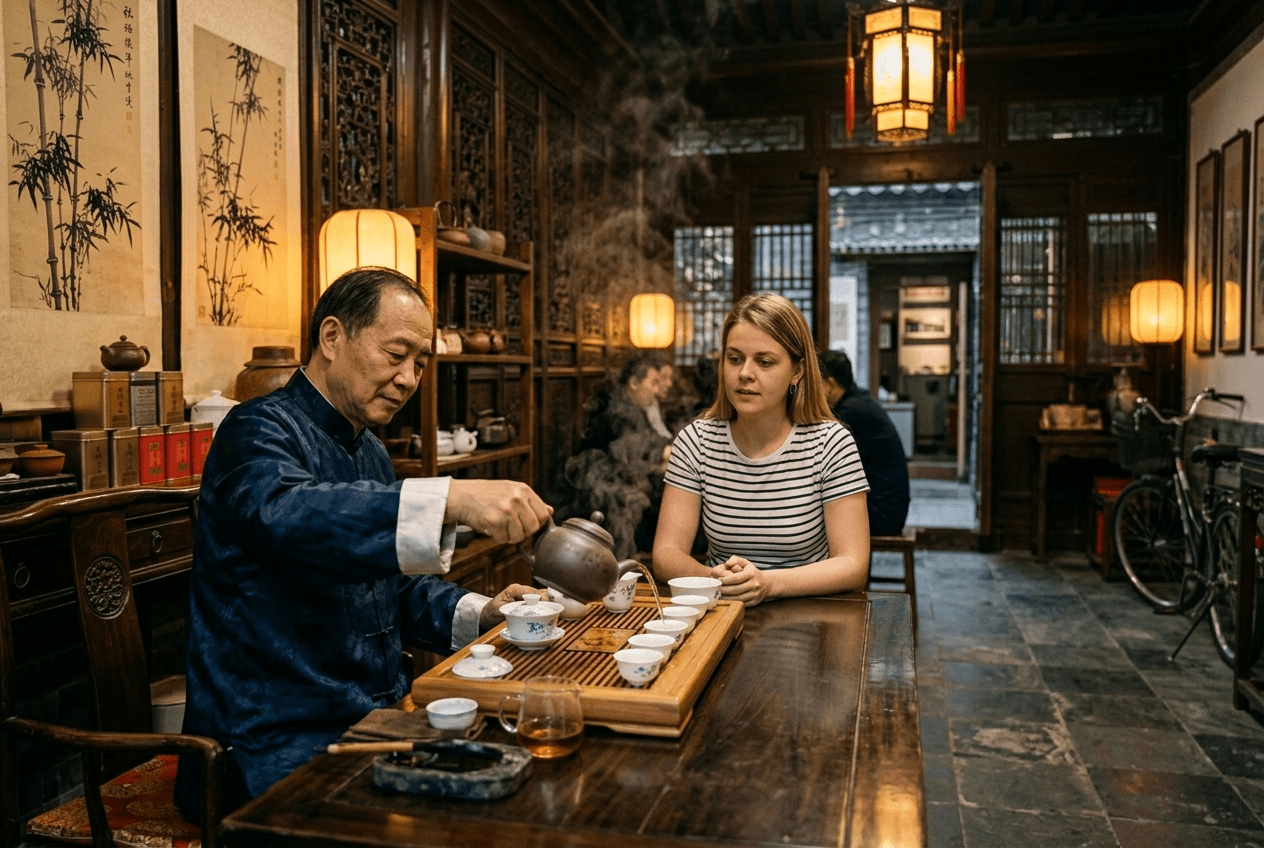
Traditional Tea Ceremony
Discover the philosophy of Chinese tea in a serene courtyard teahouse — gongfu brewing, tasting, and tea lore.
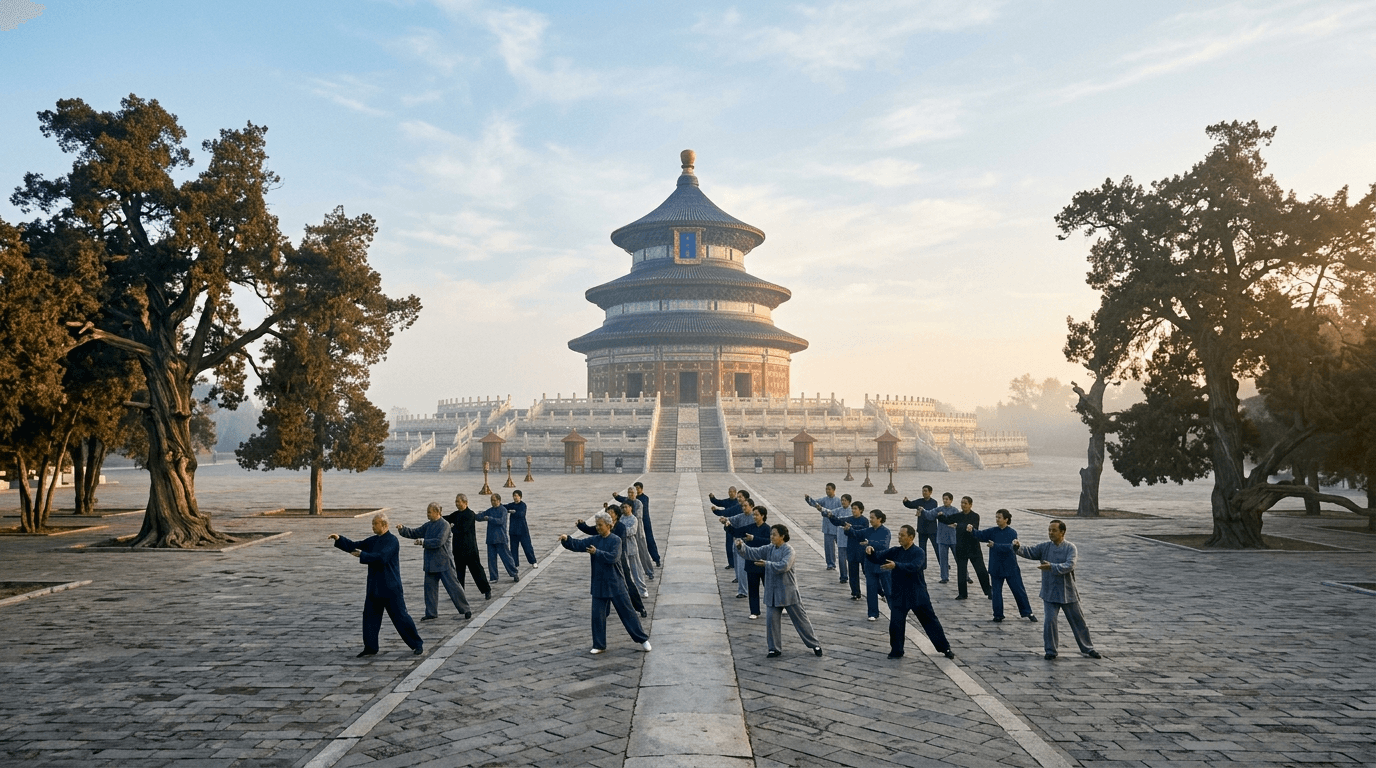
Tai Chi at Temple of Heaven
Morning tai chi with local practitioners under 600-year-old cypress trees — pure ritual and serenity.
Before you fly: every foreign traveler needs a China Arrival Card. If you don't qualify for visa-free entry, see the COVA visa application guide.
Ready to experience Cloisonné Workshop?
A local companion will handle everything — you just show up and enjoy.
Book Now