Peking Opera Backstage Experience
in Beijing, China
Duration
2–3 hours
Group Size
1–6 people
Best Time
Evening (performances typically start at 7:30 PM)
What You'll Experience
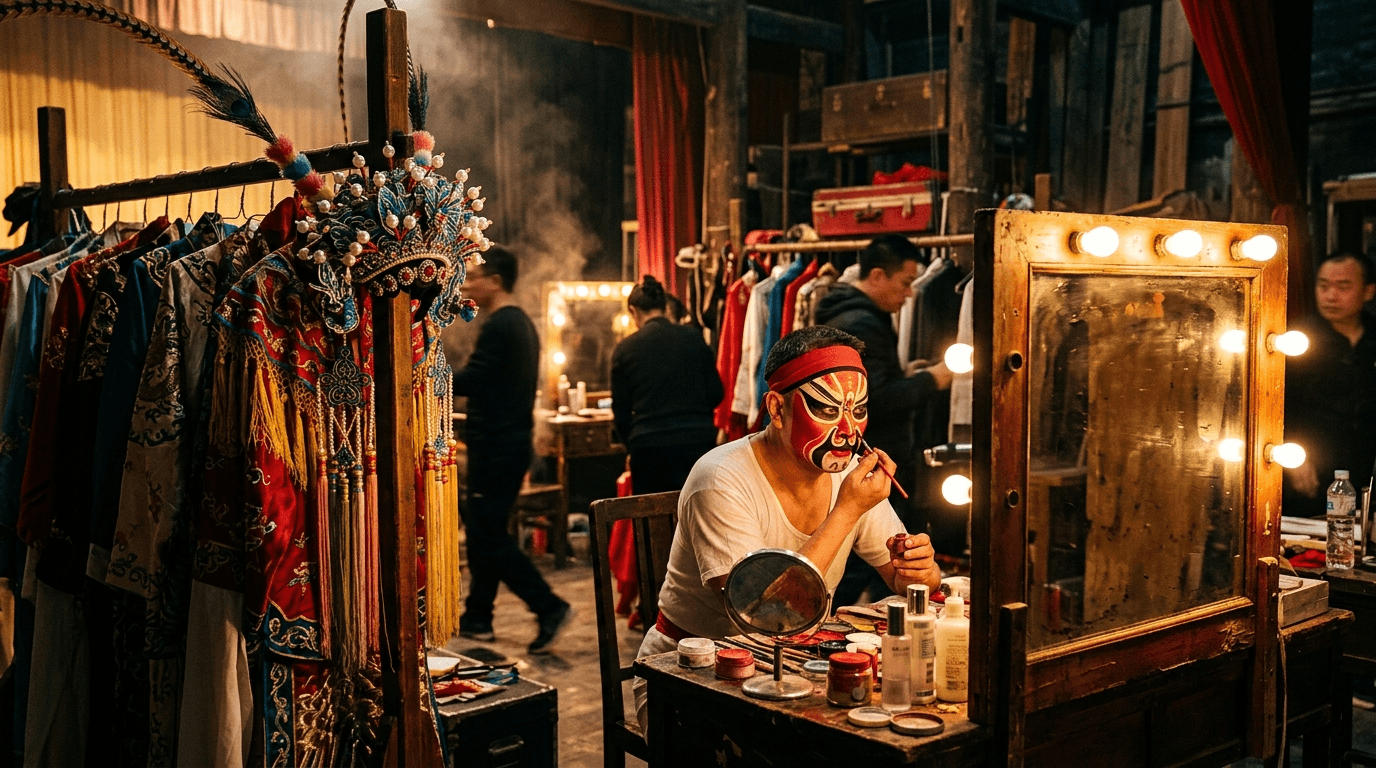
Most foreign visitors to Peking Opera sit in the dark and understand nothing. This experience takes you backstage first. You arrive an hour before the performance, when the theater belongs to the performers — a world of cracked mirrors, battered makeup cases, and the sweet smell of theatrical paint mixing with sawdust. Your companion introduces you to a face painter who has applied the same character's mask for 22 years and explains the color-coded symbolism: red for loyalty, white for cunning, black for integrity. You try on the seven-layer silk costume of a dan (female) character — headdress, sleeves, embroidered shoes — and discover it weighs more than it looks. When the performance begins, your companion translates the aria in real time, whispering the plot into your ear. The audience — elderly locals cracking sunflower seeds in the back rows — proves that this 400-year-old art form is not a museum piece.
Highlights
- Go backstage an hour before the show — meet performers in the dressing room
- Watch a master face painter apply traditional makeup and learn its symbolic language
- Try on a full Peking Opera costume — headdress, silk robes, embroidered shoes
- Watch the live performance with real-time plot translation from your companion
- Photograph backstage with the cast after the show
What's Included
- Backstage access before the performance
- Costume try-on experience
- Front-section theater seat
- Companion for real-time translation and cultural commentary
- Photo opportunity with cast post-show
Meeting Point & Area
Zhengyi Ci Theater (正乙祠戏楼), Qianmen area, Xicheng district. Nearest subway: Hepingmen (Line 2), 8-minute walk. Your companion meets you at the theater's side entrance.
Why Book with iGo2China
General admission tickets get you a seat; our experience gets you behind the curtain. Peking Opera without cultural context is 2 hours of beautiful confusion. With your companion's real-time narration, it becomes one of the most memorable performances you'll ever attend — a 400-year-old art form suddenly alive and legible.
Why backstage Peking Opera is the version worth seeing
Most foreign visitors to Peking Opera sit in the dark and understand nothing. The arias are sung in classical Chinese over a percussion ensemble that — without translation — sounds like controlled chaos. People leave during the second act. This is not the fault of the art form; it's the fault of the framing.
The version worth seeing starts an hour before the performance, in the dressing room. You meet the performers when the theater belongs to them — a world of cracked mirrors, battered makeup cases, and the sweet smell of theatrical paint mixing with sawdust. With the context of how the makeup encodes character, what the costumes weigh, why the gestures are stylized the way they are, the performance afterward becomes legible.
What you'll do
The two-to-three-hour experience has three parts. First, backstage access an hour before curtain. Your companion introduces you to a face painter who has applied the same character's mask for 22 years. Red for loyalty. White for cunning. Black for integrity. Yellow for ambition. Once you've been shown the codebook, you can read every character on stage.
Second, the costume try-on. You step into a dan (female-character) silk costume — headdress, embroidered sleeves, layered robes, raised shoes — and discover it weighs about seven kilograms. Photographers from the troupe take pictures.
Third, the performance. You sit in a front-section seat with your companion next to you whispering plot summaries and aria translations into your ear in real time. The audience is mostly elderly Beijingers cracking sunflower seeds, which proves the form is still alive — not a museum piece.
What's included
From $50 per person: backstage access before curtain, costume try-on with photos, front-section theater seat, companion for live translation throughout, and a post-show meet-and-greet with the cast for photographs. Tickets and backstage access are pre-arranged — you don't queue.
Where the experience happens
We use the Liyuan Theater inside the Qianmen Jianguo Hotel — Beijing's most established Peking Opera venue and the one with the strongest backstage relationships. It's a 7-minute taxi from Tiananmen Square or a 12-minute walk from Hepingmen subway station (Line 2). Your companion meets you at the lobby 90 minutes before the scheduled performance.
What to wear
Smart-casual. The audience tends toward dressed-up rather than tourist-casual. Avoid bare shoulders out of respect for the venue. Comfortable shoes — the costume try-on involves standing for photos in a heavy silk robe.
Performance schedule
Liyuan Theater performs nightly at 7:30 PM, with the show running about 90 minutes. Backstage access begins at 6:00 PM. The repertoire rotates weekly — your booking confirmation specifies which opera you'll see. Common pieces include 'Farewell My Concubine,' 'The Drunken Concubine,' and excerpts from 'The Monkey King.'
Who this is for
Anyone who has ever been told 'you should see Peking Opera' and didn't because they were warned it would be impenetrable. The backstage framing makes the form accessible without dumbing it down. Particularly good for travelers interested in performing arts, costume history, or 19th-century Chinese culture more broadly.
Frequently Asked Questions
How much does a Peking Opera backstage experience in Beijing cost?
From $50 per person. Includes backstage access before curtain, costume try-on with photos, front-section seat, live translation throughout, and post-show cast photos.
Where is the Peking Opera performed?
At Liyuan Theater inside Qianmen Jianguo Hotel — Beijing's most established Peking Opera venue. A 7-minute taxi from Tiananmen Square or 12 minutes' walk from Hepingmen subway station (Line 2).
What time does Peking Opera start in Beijing?
Nightly at 7:30 PM at Liyuan Theater. The performance runs about 90 minutes. With backstage access starting at 6:00 PM, plan for a 3-hour evening.
Do I need to speak Chinese?
No. Your companion provides real-time English translation of plot and arias throughout the performance. Backstage interactions are also fully translated.
What should I wear to a Peking Opera?
Smart-casual. The audience dresses up; avoid shorts or bare shoulders. Comfortable shoes for the costume try-on.
Can I take photos backstage?
Yes — backstage photography is included in the experience, and the costume try-on is documented by the troupe's photographer. Flash is not allowed during the performance itself.
More Experiences in Beijing
Chinese Calligraphy Workshop
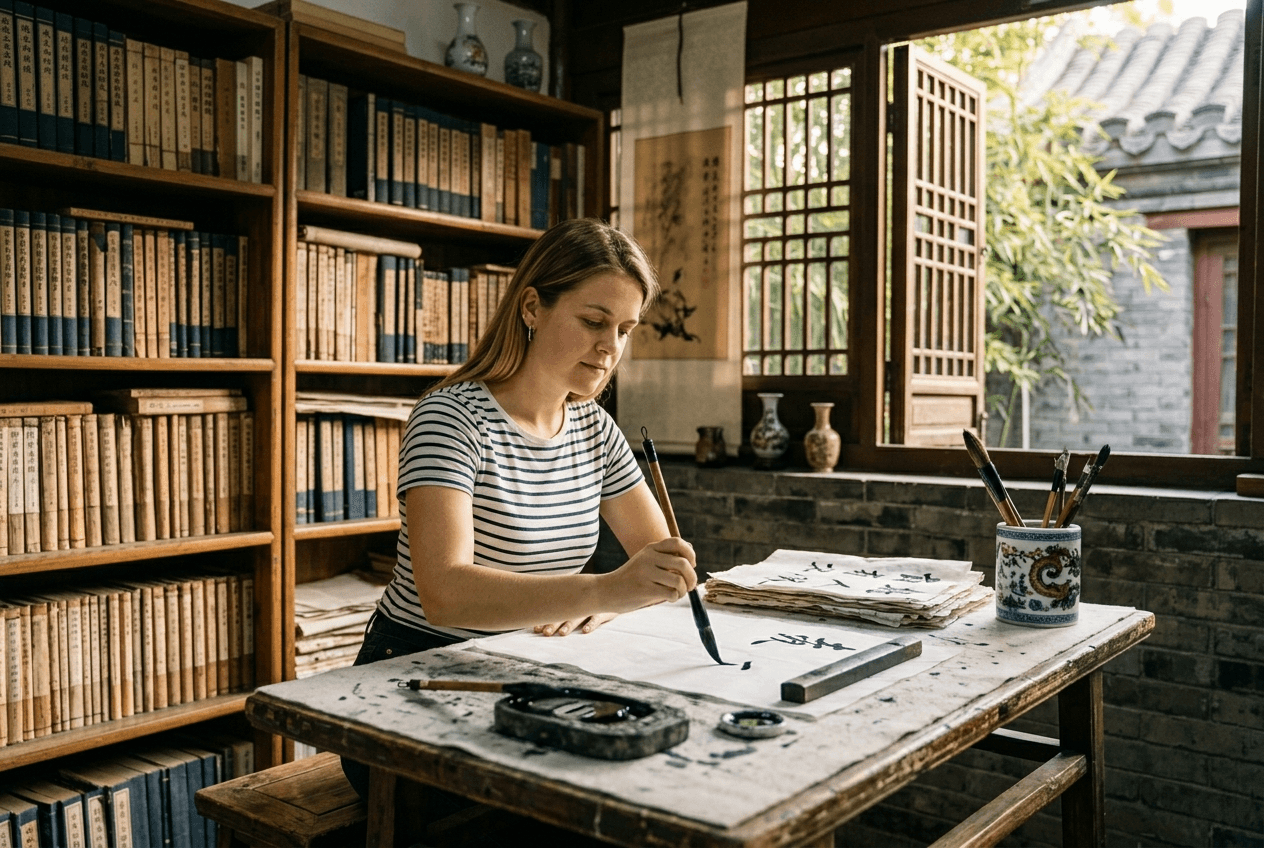
Master the art of brush strokes with a patient local teacher in a traditional courtyard studio.
Traditional Tea Ceremony
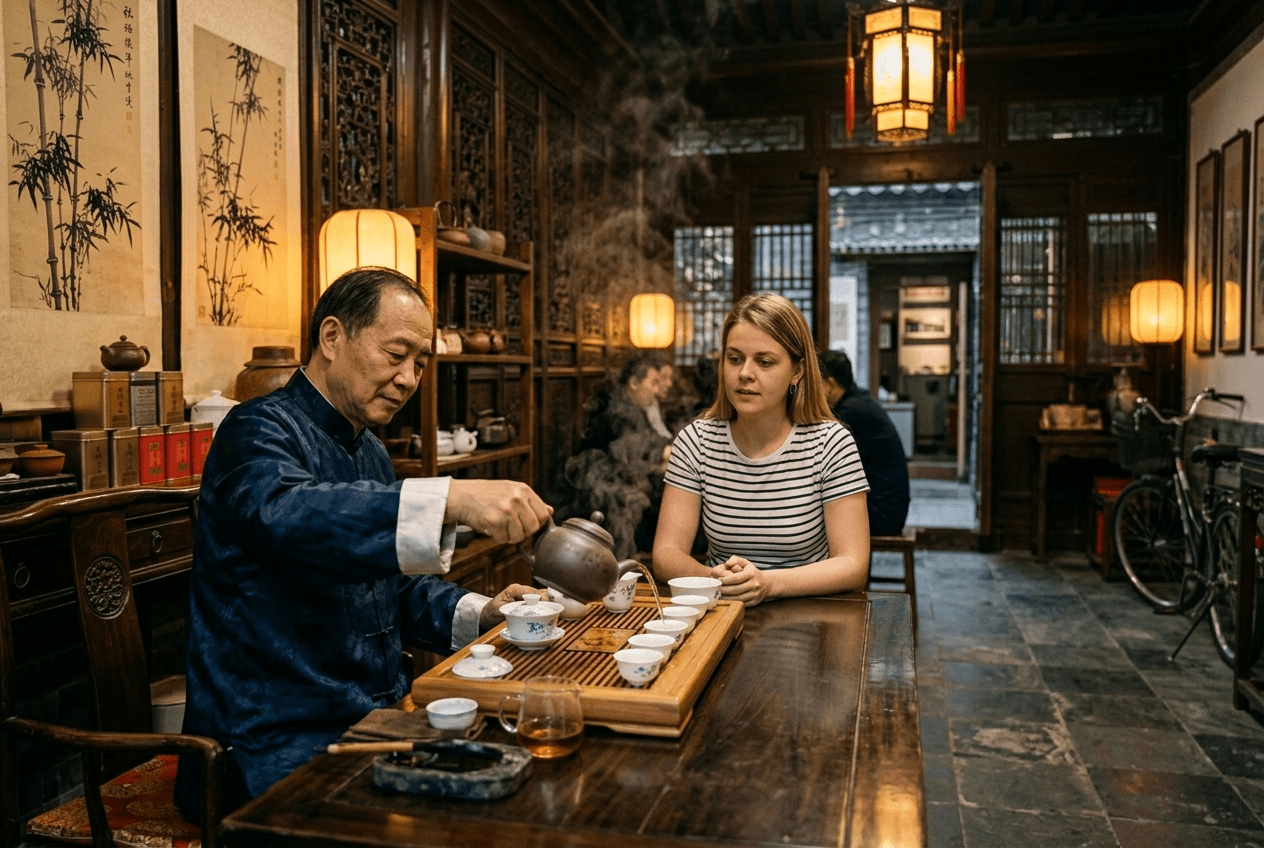
Discover the philosophy of Chinese tea in a serene courtyard teahouse — gongfu brewing, tasting, and tea lore.
Tai Chi at Temple of Heaven
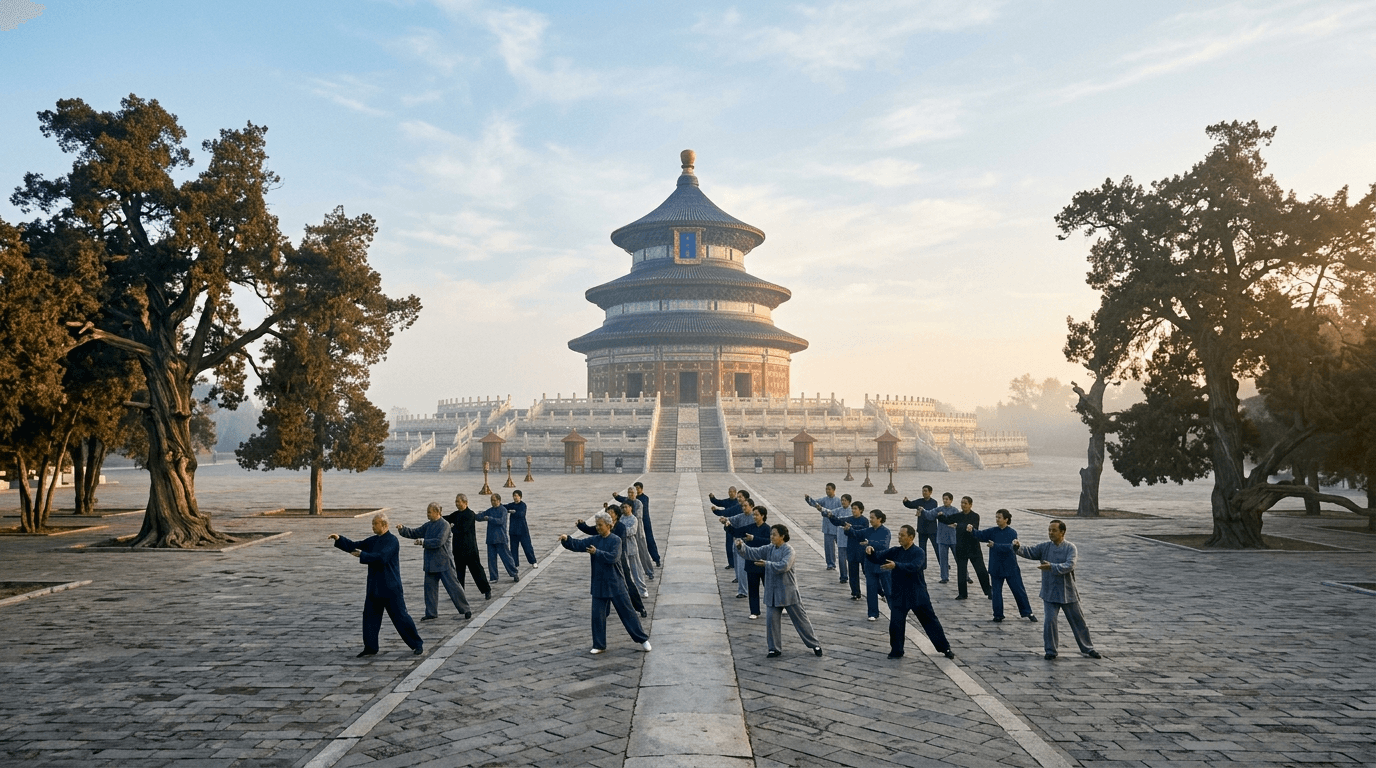
Morning tai chi with local practitioners under 600-year-old cypress trees — pure ritual and serenity.
Before you fly: every foreign traveler needs a China Arrival Card. If you don't qualify for visa-free entry, see the COVA visa application guide.
Ready to experience Peking Opera Backstage Experience?
A local companion will handle everything — you just show up and enjoy.
Book Now