Foshan Kung Fu Day Trip
in Guangzhou, China
Duration
6–8 hours
Group Size
1–6 people
Best Time
Full day — depart Guangzhou by 9 AM, return by 6 PM
What You'll Experience
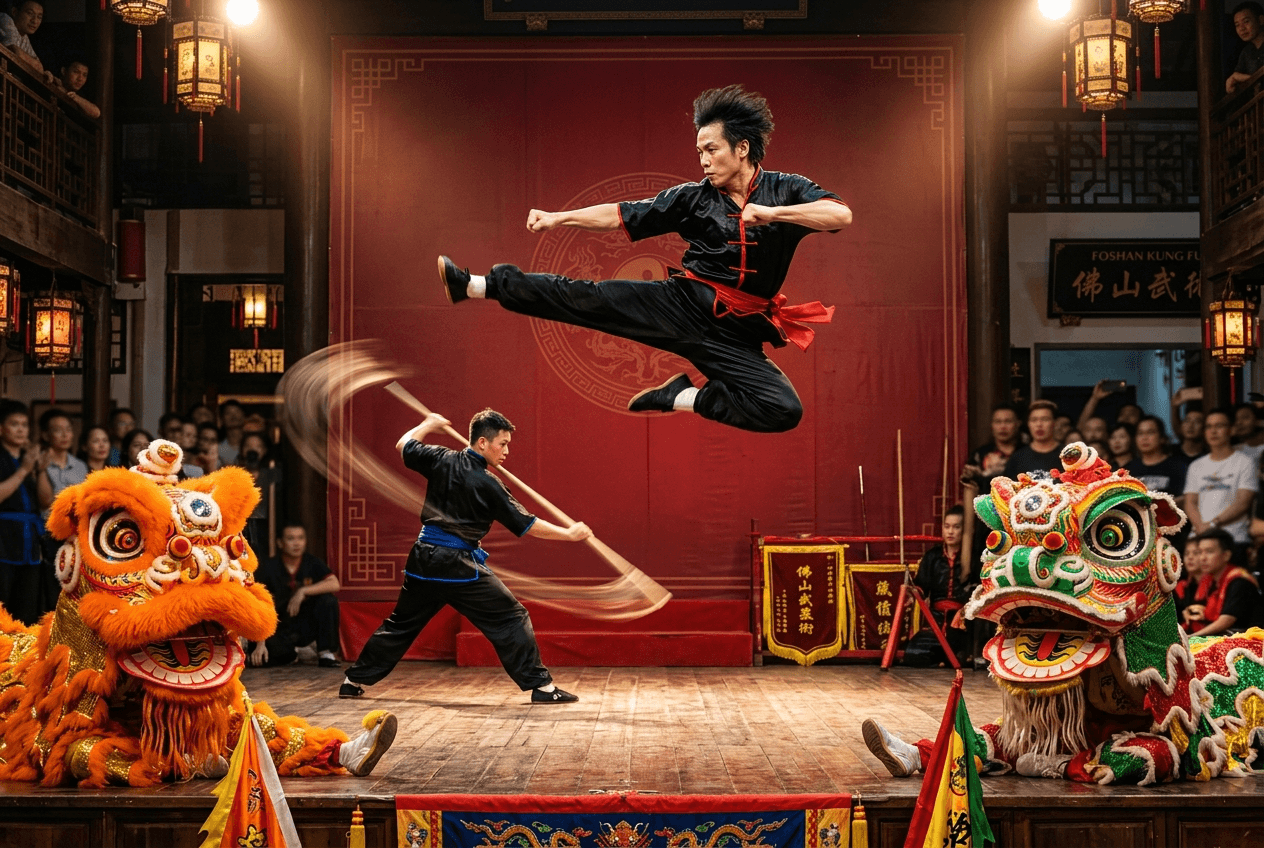
Foshan is the birthplace of multiple styles of southern Chinese kung fu — Wing Chun, Hung Ga, Choy Li Fut — and the home of Ip Man, Wong Fei-hung, and a martial arts heritage so dense that the city has its own dedicated museum and a martial arts park where practitioners still train every morning. The day trip from Guangzhou (30 minutes by metro) takes you through four sites in one packed day: the Ancestral Temple (Zumiao) with its Hall of Guan Yu and cast-iron warrior statues, the Foshan Martial Arts Hall where a coach runs you through basic Wing Chun footwork and the vertical fist strike that made the style famous, the Lion Dance Museum where you learn the etiquette of a performance art used in business openings and temple festivals across the world, and the Nanfeng Ancient Kiln — a Ming dynasty dragon kiln still firing traditional Shiwan ceramic ware every day of operation.
Highlights
- Practice Wing Chun kung fu basics with a certified instructor at the Foshan Martial Arts Hall
- Visit the Ancestral Temple and its Hall of Guan Yu — a pilgrimage site for martial artists across Asia
- Watch a lion dance rehearsal and learn the body language that distinguishes Guangdong style from northern forms
- Tour the Nanfeng Ancient Kiln — a 500-year-old dragon kiln firing traditional Shiwan ceramics
- Learn why Foshan is not just the birthplace of kung fu but of the southern Chinese industrial tradition
What's Included
- Return metro to Foshan
- All entrance fees (Zumiao, Martial Arts Hall, Lion Dance Museum, Nanfeng Kiln)
- Kung fu lesson with a certified instructor
- Companion for the full day as guide and translator
- Cantonese lunch at a local restaurant in Foshan
Meeting Point & Area
Guangzhou South Railway Station subway (Line 2/Guangfo Line), Foshan direction. Your companion meets you at Guangzhou South station at 9 AM and guides the entire day.
Why Book with iGo2China
Foshan is easy to reach but hard to navigate — the martial arts sites are spread across the city and the Foshan metro map is not in English. Your companion has made this trip dozens of times, knows which martial arts teacher actually teaches rather than demos, and can read the ceramic kiln firing schedule to ensure you arrive when firing is active. They turn a day of sites into a day of understanding.
Why Foshan is the most important kung fu pilgrimage in China
Foshan is where southern Chinese kung fu was born. Wing Chun (Bruce Lee's first style, learned from Ip Man, who was born and trained in Foshan), Hung Ga, Choy Li Fut, and the lion dance traditions that travel across Chinese diaspora communities worldwide all originated here. The city is home to a dedicated martial arts museum, a public training park where practitioners still drill every morning, and the Ancestral Temple complex that serves as a pilgrimage site for martial artists across Asia.
It's also a 30-minute metro ride from Guangzhou — making it one of the easiest day trips from a major Chinese city. Most travelers don't realize this, which is why the sites are still uncrowded by tourist standards.
The four sites of the day
The standard Foshan kung fu day trip covers four sites in a single day. First, the Ancestral Temple (Zumiao) — a 1,000-year-old complex with a Hall of Guan Yu, cast-iron warrior statues, and a small pond of carp the family came to feed for centuries. Second, the Foshan Martial Arts Hall, where a certified Wing Chun coach runs you through the basic stance, footwork, and the vertical fist strike that made the style famous. You don't become a martial artist in 45 minutes, but you understand what the training feels like.
Third, the Lion Dance Museum and live rehearsal — Foshan-style lion dance differs from northern Chinese forms in body language, drum patterns, and the use of plum-blossom poles (梅花桩) for advanced performances. Watching a rehearsal is more interesting than watching a polished performance because you see the corrections, the grunting, the missed jumps. Fourth, the Nanfeng Ancient Kiln — a 500-year-old dragon kiln still firing traditional Shiwan ceramics every day of operation. The last continuously operating dragon kiln of its kind anywhere in the world.
What's included
From $55 per person, the day trip includes return high-speed metro from Guangzhou to Foshan (about 30 minutes each way), all four site entrance fees, the Wing Chun lesson with a certified instructor, the lion dance rehearsal viewing, lunch at a Foshan local restaurant (Cantonese, not tourist-grade), and your English-speaking companion for the full day. Total time door-to-door is 6–8 hours.
Where to meet
We meet at Guangzhou South Railway Station at 8:30 AM — that's the high-speed-rail hub for the Guangzhou-Foshan connection. Your companion has tickets pre-purchased. The first train of the day to Foshan West runs about every 15 minutes, takes 30 minutes, and arrives at the start of the Foshan kung fu trail.
Best time of year
October through April is the best window. Foshan summers are humid even by southern Chinese standards, and three of the four sites are partially outdoors. Winter (December–February) is mild and dry — ideal for a day of walking between sites. Spring Festival (Chinese New Year) week is unique because the lion dance teams perform daily — a separate booking required for that window.
Who this trip is for
Anyone interested in martial arts, Chinese cultural heritage, or the southern Chinese industrial tradition (Foshan was also the heart of southern Chinese ceramics, foundry work, and traditional pharmaceuticals). Particularly good for fans of Ip Man, Bruce Lee, or the southern action film tradition. Children old enough to participate in the Wing Chun basics (~8+) get a lot from the day.
What to wear
Comfortable, athletic clothes you can train in — the Wing Chun lesson involves stances and pivots. Closed-toe shoes (no sandals). Layers in winter, since some venues are unheated. A small bag for the ceramic souvenir most guests buy at Nanfeng Kiln.
Frequently Asked Questions
How much does a Foshan kung fu day trip from Guangzhou cost?
From $55 per person for a full 6–8 hour day. Includes return high-speed metro, all four site entrance fees, Wing Chun lesson with a certified instructor, lion dance rehearsal viewing, lunch, and an English-speaking companion.
Is Foshan really the birthplace of Wing Chun?
Yes. Wing Chun was developed and taught in Foshan from the 19th century onward. Ip Man — Bruce Lee's first kung fu master — was born and trained in Foshan, and his school still runs there today.
How do I get to Foshan from Guangzhou?
High-speed metro from Guangzhou South Railway Station to Foshan West takes about 30 minutes. Trains run roughly every 15 minutes throughout the day.
Can I learn Wing Chun in a single visit?
You learn the foundational stance, footwork, and vertical fist strike in a 45-minute introduction with a certified instructor. You don't become a martial artist in 45 minutes, but you understand what the training feels like.
What other sites are visited on the Foshan kung fu day trip?
The Ancestral Temple (Zumiao), the Foshan Martial Arts Hall, the Lion Dance Museum (with live rehearsal), and the Nanfeng Ancient Kiln — the last continuously operating dragon kiln of its kind in the world.
Is the Foshan trip suitable for children?
Yes, ages 8+ can participate in the Wing Chun lesson. Younger children can observe and visit the other three sites without issue.
More Experiences in Guangzhou
Chen Clan Academy Tour
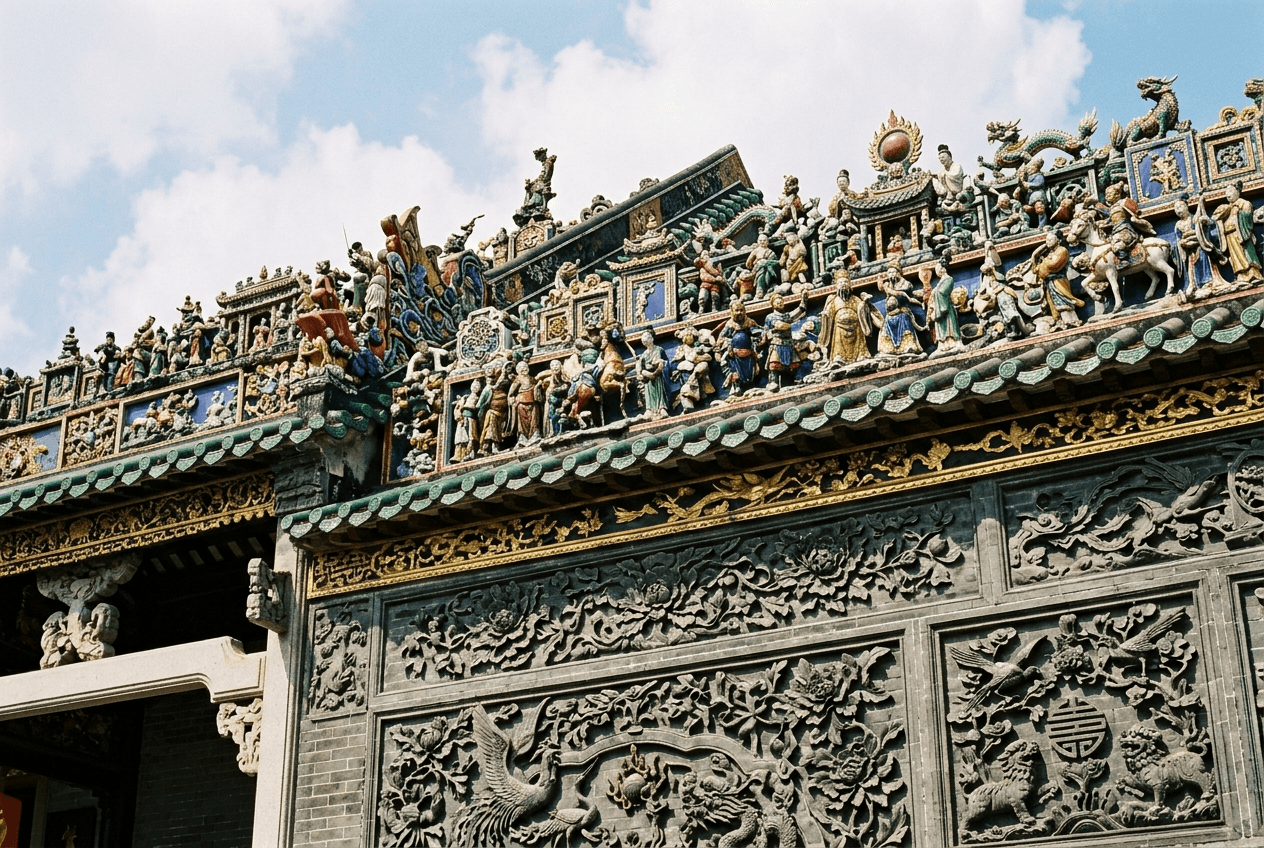
Guangzhou's architectural treasure — seven Lingnan art forms (three carvings, two sculptures, one casting, one painting) under one roof, decoded by a local guide.

Cantonese Opera Costume Experience
UNESCO intangible heritage — get opera makeup, wear silk costumes, and pose at Yongqingfang.

Yongqingfang Heritage Walk
Bruce Lee's ancestral home, Cantonese Opera Museum, Moon Bridge, and artisan workshops — old Canton reborn.
Before you fly: every foreign traveler needs a China Arrival Card. If you don't qualify for visa-free entry, see the COVA visa application guide.
Ready to experience Foshan Kung Fu Day Trip?
A local companion will handle everything — you just show up and enjoy.
Book Now