Pearl River Night Cruise
in Guangzhou, China
Duration
1–1.5 hours
Group Size
1–10 people
Best Time
Evening (8–10 PM when the light show is running)
What You'll Experience
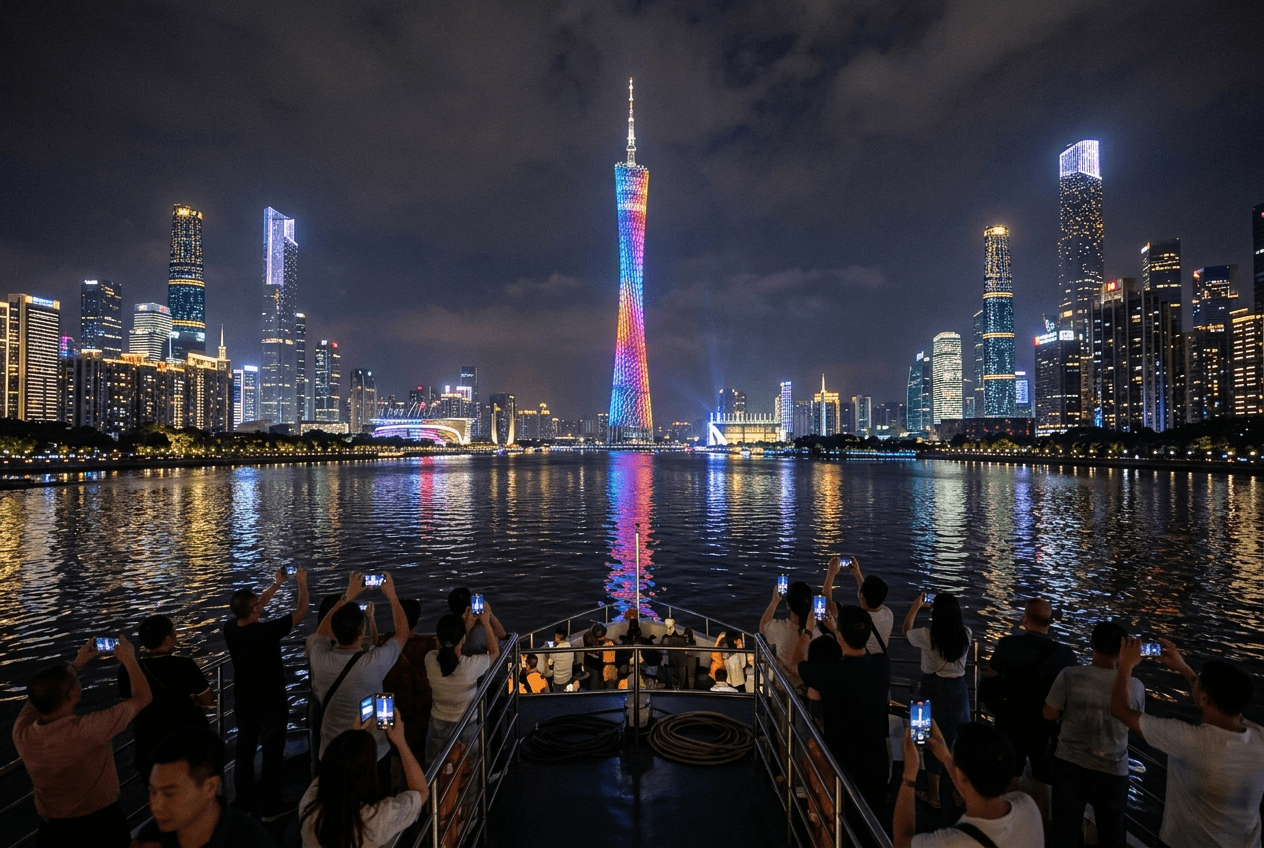
After dark, Guangzhou becomes a different city — one that announces itself in light. The Pearl River at night is the best place to understand the scale of this transformation: the Canton Tower rotating its neon rings 600 meters above the water, the Haizhu Bridge's Art Deco ironwork lit in red and gold, the old colonial buildings on Shamian Island glowing amber against the river's reflection. Your companion books a boat with character rather than the standard tourist fleet — a smaller vessel that moves at conversation pace, with open-air seating at the bow where the Pearl River air, warm and slightly saline even this far inland, comes at you from all directions. The cruise takes in the best of both banks, docks at a historic pier, and concludes at a riverside bar your companion knows from years of Thursday evenings. The total fare for the boat is less than a glass of wine in most cities. The view is not.
Highlights
- Board a smaller heritage-style vessel for a more intimate river experience
- See the Canton Tower's full light show from the water — the best possible angle
- Pass under the Haizhu Bridge and see its colonial-era ironwork illuminated
- View Shamian Island from the river — the vantage point its architects intended
- Disembark at a historic riverside pier and walk to a companion-recommended evening bar
What's Included
- Pearl River cruise ticket (approx. 45–60 min on the water)
- Companion throughout for commentary and next-step navigation
- Transport to and from the departure pier
- Post-cruise drink at a riverfront bar
Meeting Point & Area
Tianziwharf (天字码头), a 7-minute walk from Haizhu Square subway station (Lines 2/6). Your companion will be at the pier entrance at the agreed time.
Why Book with iGo2China
The standard tourist boats are large, loud, and narrated in Mandarin by a recording. Your companion books a boat that moves slowly enough to have a conversation on, and provides the cultural narrative that explains what you're seeing and what it means in the context of Guangzhou's history. The drink afterward is included because no good evening on the Pearl River should end the moment you step off the boat.
Why the Pearl River night cruise is Guangzhou's signature evening
After dark, Guangzhou becomes a different city — one that announces itself in light. The Pearl River at night is the best place to understand the scale of that transformation. The Canton Tower rotates its 600-meter neon rings above the south bank. The Haizhu Bridge's Art Deco ironwork lights up red and gold. The colonial buildings on Shamian Island glow amber against the river's reflection. From the water, you see all of it from the angle the architects originally intended — which is rarer than it sounds, because most of the city's best façades were designed to be looked at from a boat.
A Pearl River night cruise is also one of the cheapest "wow" moments in any major Chinese city. The boat ticket alone runs ¥130–¥220 (about $19–$30). For most of our guests, it ends up being the photo they send home first.
What's different about booking through iGo2China
The standard Pearl River tourist boats — the ones you see advertised at hotels — are large, loud, and narrated in Mandarin by a recording. They take 300+ people, the seating is fixed, and the schedule is rigid. They work, but the experience is closer to a commuter ferry than an evening out.
We book a smaller heritage-style vessel that moves at conversation pace. There's open-air seating at the bow where the river air, warm and slightly saline even this far inland, comes at you from all directions. Your companion is on board the whole time, providing the cultural context — what the buildings are, when they were built, why the bridges look the way they do, what's changed since the 1980s. After you disembark, they walk you to a riverside bar they know from years of Thursday evenings. That last drink is the part most cruise operators leave out, and it's usually the part guests remember.
What you'll see — the full route
A typical Pearl River cruise is 60–90 minutes on the water and covers about 12 km of riverbank. The route depends on the pier and the vessel, but the highlights are consistent: the Canton Tower (广州塔), 600 meters tall and the world's fourth-tallest free-standing structure, with its full light show running roughly 8:00–10:00 PM and best viewed from the water; the Haizhu Bridge (海珠桥), Guangzhou's first iron bridge, built in 1933, with Art Deco ironwork uplit at night; the Liede Bridge and the modern skyline cluster of futuristic towers on the Zhujiang New Town side — the IFC, CTF Finance Centre, and the Guangzhou Opera House; Shamian Island (沙面岛), the 19th-century European concession with its tree-lined avenues and consulate buildings, where the river-facing façades are the ones the architects actually finished; and Tianzi Wharf (天字码头), the historic imperial pier dating to the Qing dynasty, often the start or end point for our route.
When to go
The best time of year is March–May or September–November. Summer (June–August) is hot, humid, and brings frequent thunderstorms; winter is mild but the air is sometimes hazy. The light show runs every evening regardless of season.
The best time of day is 8:00–10:00 PM — late enough for full darkness, early enough that the city is still alive. We don't recommend the 6:30 PM departures: you miss the light show and the river hasn't yet shifted into its night character.
How much does a Pearl River night cruise cost?
Boat tickets range from ¥130 (basic) to ¥220 (premium with food). With iGo2China, the all-in package starts at $19 per person and includes the Pearl River cruise ticket (45–60 minutes on the water), a local companion throughout — no language barrier, no guesswork — transport to and from the departure pier, and a post-cruise drink at a riverfront bar.
Children under 1.2 m are usually free with a paying adult. Group rates apply for 6+ guests.
Where to meet — the boarding pier
We board at Tianzi Wharf (天字码头), a 7-minute walk from Haizhu Square subway station (Lines 2 and 6). It's the most central and historically significant of Guangzhou's piers, and it's where the largest fleet of evening cruises depart from. Your companion meets you at the pier entrance 20 minutes before departure to handle ticketing.
If you're staying in Zhujiang New Town, we can also depart from Pazhou Pacific Pier — slightly closer to most modern hotels, with a longer route past the Opera House.
What to wear and bring
Bring a light jacket even in summer — the river breeze is cooler than the city. A camera or phone with night mode is worth having; the Canton Tower light show photographs well from the water. Bring some cash or mobile pay — Tianzi Wharf has small vendors, and the riverside bar afterward may not take foreign cards. Your companion can help with WeChat Pay or Alipay setup if needed.
Combining with other Guangzhou experiences
Most guests do the Pearl River cruise on their first night in Guangzhou — it's a low-effort orientation to the city's geography. It pairs naturally with a late-afternoon walk through Shamian Island before the cruise (you'll then see from the water the streets you walked), a Cantonese dim sum lunch the next morning to recover from the late evening, and the Foshan kung fu day trip the following day — Foshan is 30 minutes away and is the historic home of Wing Chun and Hung Gar.
Booking and cancellation
Book at least 24 hours in advance during peak season (October holiday, Chinese New Year, May Day). Last-minute bookings are usually possible but premium boats fill first. Free cancellation up to 6 hours before departure. Weather cancellations (typhoon-grade only — light rain doesn't stop the cruise) are fully refunded.
Frequently Asked Questions
How long is a Pearl River night cruise in Guangzhou?
Most cruises are 60–90 minutes on the water. With pier transit and the post-cruise drink, plan for 2.5 hours total.
How much does a Pearl River cruise cost?
Boat tickets are ¥130–¥220. The iGo2China all-in package starts at $19 per person and includes the ticket, companion, pier transit, and a post-cruise riverside drink.
What's the best time for the Pearl River cruise?
8:00–10:00 PM, when the Canton Tower light show is running and the river is fully dark. March–May and September–November are the best months for weather.
Where do Pearl River night cruises depart from?
Most depart from Tianzi Wharf (天字码头), a 7-minute walk from Haizhu Square subway station on Lines 2 and 6. Some routes leave from Pazhou Pacific Pier, closer to Zhujiang New Town hotels.
Is the Pearl River cruise worth it?
It's the single highest signal-to-cost evening in Guangzhou — the boat ticket is cheaper than a glass of wine in most cities, and you see every major landmark of the city from the angle they were designed to be seen from.
Can I book a private boat on the Pearl River?
Yes, for groups of 6+ we can charter a private vessel at the heritage-style pier. Contact us for pricing — typically $35–$50 per person depending on group size and route.
More Experiences in Guangzhou
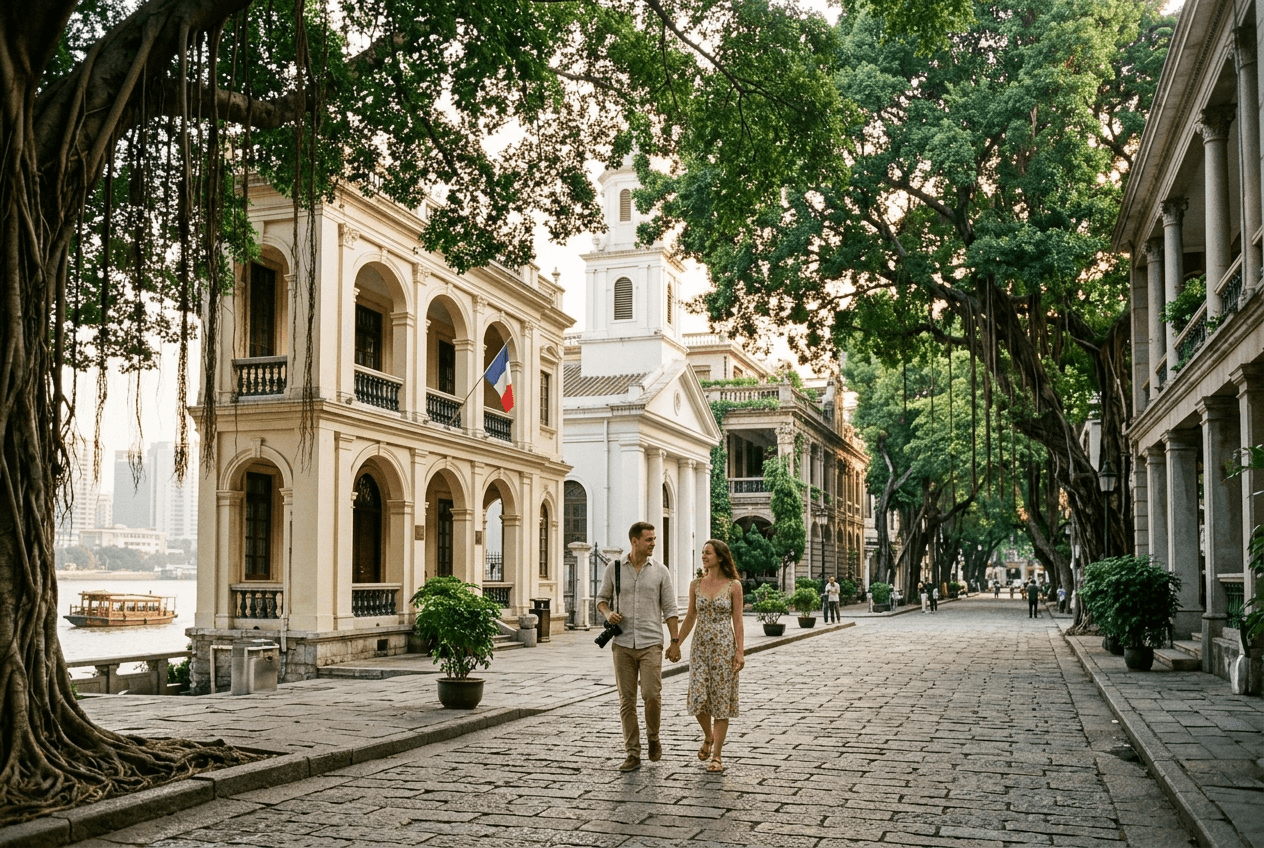
Shamian Island Walk
150 European heritage buildings on a peaceful island — where East met West in old Canton.
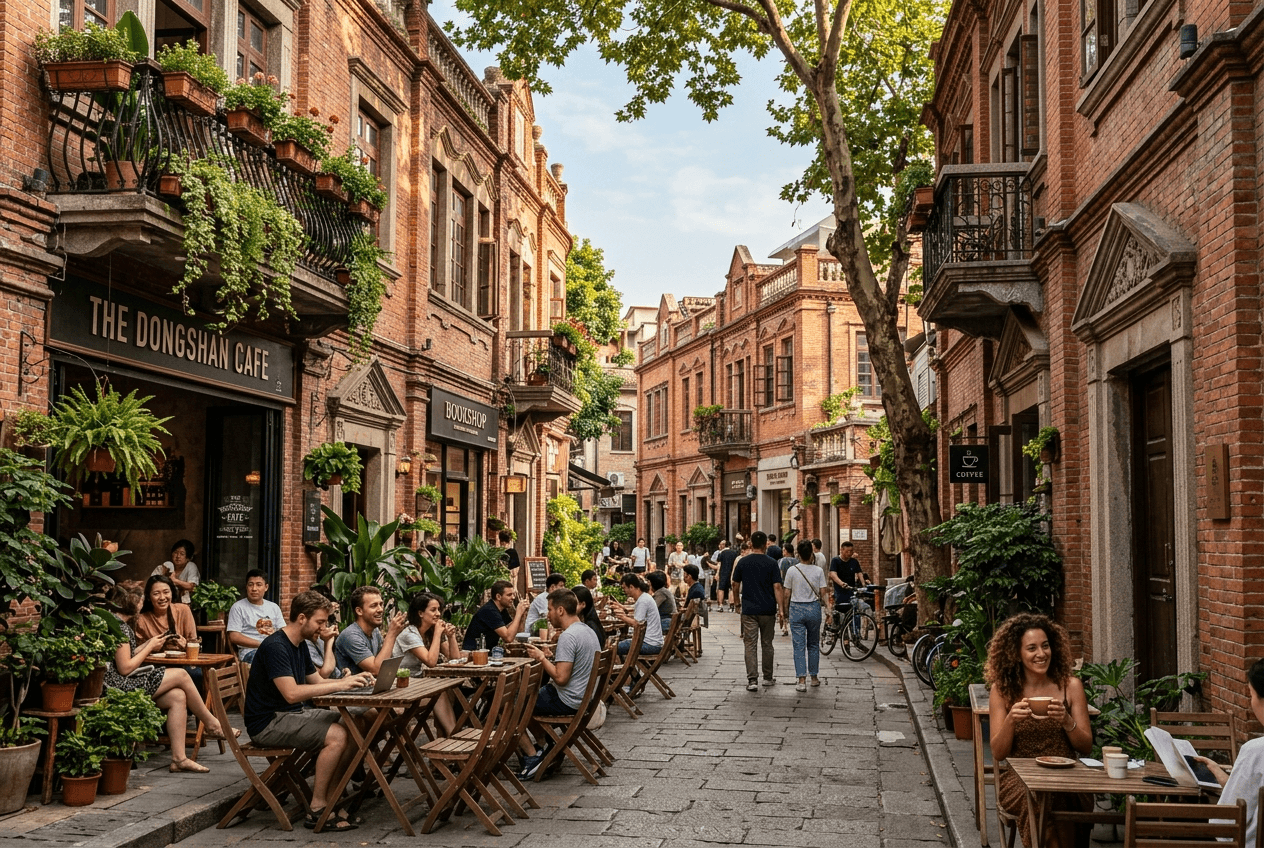
Dongshan Mansion Citywalk
Red-brick villas meet streetwear boutiques — 'Dongshan Young Masters' heritage fused with modern cool.
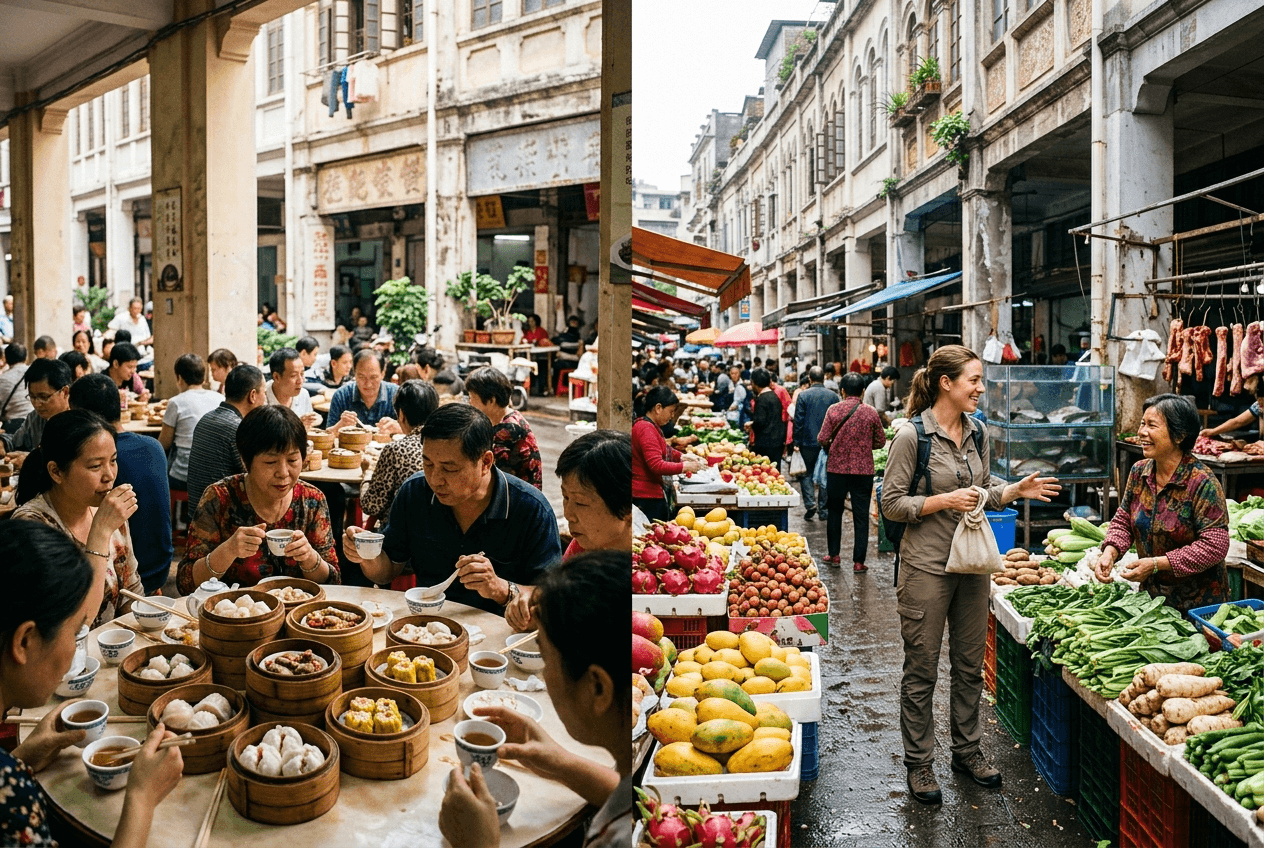
Live Like a Local — Full Day
Dim sum dawn to wok hei midnight: park tai chi, yum cha, old Canton alleys, Dongshan coffee, and charcoal hotpot.
Before you fly: every foreign traveler needs a China Arrival Card. If you don't qualify for visa-free entry, see the COVA visa application guide.
Ready to experience Pearl River Night Cruise?
A local companion will handle everything — you just show up and enjoy.
Book Now