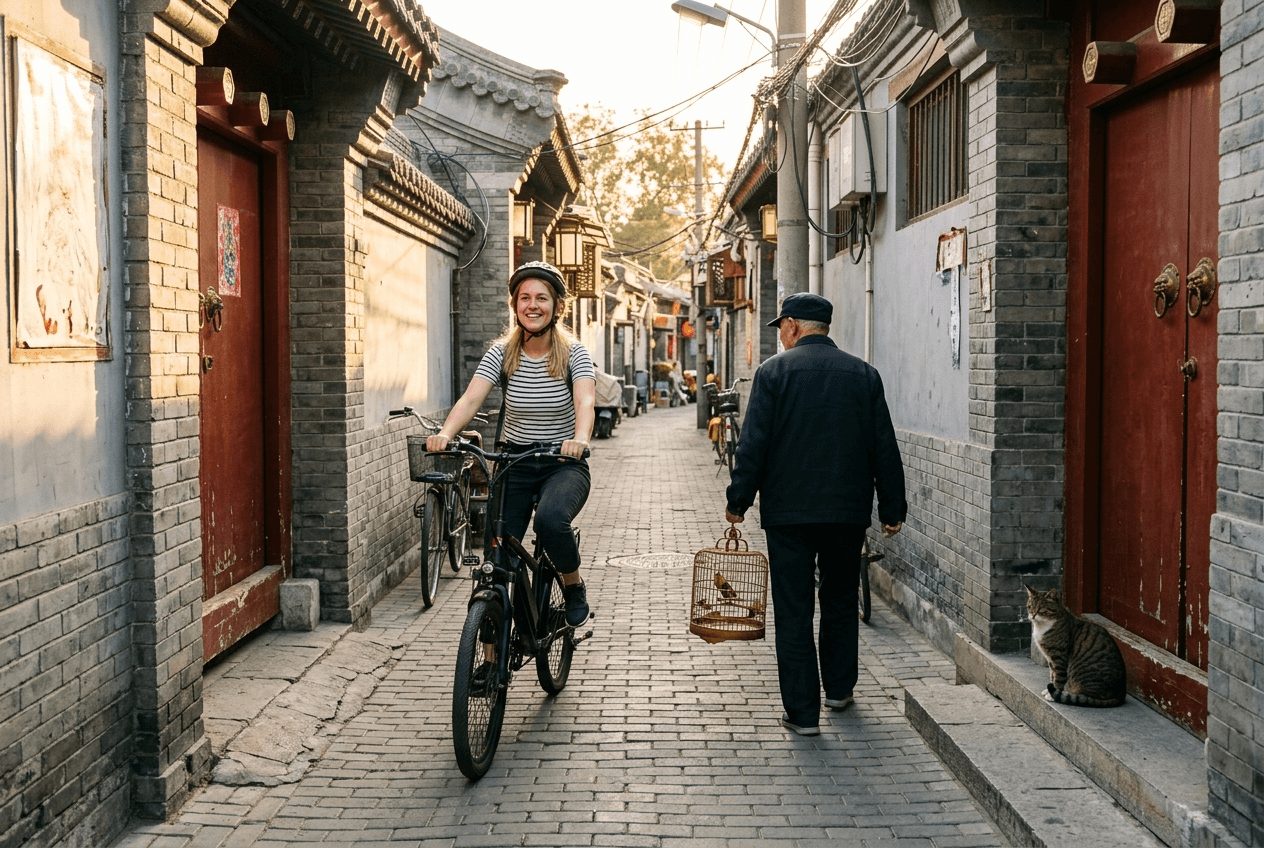
Hutong E-Bike Tour
in Beijing, China
Duration
2.5–3 hours
Group Size
1–6 people
Best Time
Morning (8–11 AM for golden light and fewer crowds)
What You'll Experience
Glide through Beijing's ancient alleyways on an electric bike as your local companion brings 700 years of history to life around every corner. The hutongs — narrow lanes named after the Mongolian word for "water well" — form a living museum hidden just steps from Tiananmen Square. You'll weave past weathered courtyard gates, stop to chat with elderly residents playing chess under a canopy of locust trees, and duck into a family-run baozi stall that has served the same recipe for three generations. Your companion navigates the maze effortlessly, finding hidden squares, a vintage record shop, and a stretch of old city wall few tourists ever see. By the time you coast back to the meeting point, you'll understand why Beijingers fiercely protect these lanes — they are not just architecture, they are a way of life.
Highlights
- Ride electric bikes through 700-year-old hutong alleyways
- Visit an authentic siheyuan (courtyard home) open to locals only
- Discover a hidden artisan workshop making hand-painted cloisonné
- Sample street snacks from a neighborhood baozi stall — cash only, locals only
- Capture photo-perfect doorways, bicycles, and blooming courtyard trees
What's Included
- Electric bike rental for the duration
- English-speaking local companion
- One street snack included
- Bottled water
- All entrance fees to private courtyards visited
Meeting Point & Area
Nanluoguxiang subway station (Line 8), Exit B. Look for your companion holding an iGo2China sign at the top of the escalator.
Why Book with iGo2China
Our companions grew up in these hutongs — they know which courtyards are open to respectful visitors and which vendors are worth stopping at. Unlike tour-bus operators who rush you through Nanluoguxiang's commercial strip, we show you the real residential lanes. Zero souvenir-shop stops, zero commission kickbacks — just authentic local life.
Why the hutong tour is the best way to see real Beijing
Modern Beijing is a city of ring roads and 30-story residential towers. The Beijing that visitors come to see — courtyard houses, narrow lanes, neighborhoods where everyone knows each other — survives in the hutongs, the network of alleys named after the Mongolian word for 'water well.' They form a living museum hidden just steps from Tiananmen Square.
On foot you cover maybe two hutongs in two hours. On an e-bike with a local companion, you cover fifteen — and the difference matters. The hutong network is so dense and interconnected that the experience only makes sense at bike pace. You weave past weathered courtyard gates, stop where the elderly residents play chess under locust trees, and duck into a family baozi stall that has served the same recipe for three generations.
What you'll see
The 2.5–3 hour route adapts to season and weather but typically includes Nanluoguxiang's quieter side lanes (we avoid the main commercialized strip), a private siheyuan (courtyard home) the family allows guests to enter, a stretch of original Ming-dynasty city wall few tourists ever see, the Bell and Drum Tower square at a quiet hour, and a hidden artisan workshop making hand-painted cloisonné. The exact route depends on which alleys are open that day — this is a working neighborhood, not a theme park.
What's included
From $45 per person: electric bike rental for the duration (helmets included; bikes have a top assisted speed of 25 km/h), English-speaking local companion, one street snack at a hutong stall (typically a baozi or jianbing), bottled water, and entrance fees to private courtyards visited.
Where the tour starts
We meet at the Drum Tower (Gulou) area — a 5-minute walk from Shichahai subway station (Line 8). Your companion has the bikes pre-positioned and runs through the controls and a quick orientation before you set off. The route loops back to the Drum Tower so you finish where you started.
Best time of day and year
Mornings (8 AM–11 AM) are the best time of day. The light is good, the alleys are quietest, and the breakfast stalls are at their peak. We avoid the 1 PM–4 PM window in summer because the heat is unpleasant on a bike. Evening rides (5 PM–7 PM in summer, 4 PM–6 PM in winter) work as a second-best alternative.
Spring (April–May) and autumn (September–October) are the best seasons. Winter rides are possible if you dress for it — Beijing winters are dry and cold, but the alleys are particularly atmospheric in the low light. Summer rides start very early to beat the humidity.
Riding requirements
Anyone who can ride a regular bicycle can ride these e-bikes — they have pedal-assist rather than throttle-only mode, so the experience is closer to easy cycling than scootering. No license required. Helmets are mandatory and provided. Children under 12 ride pillion on a parent's bike (we have a child seat available).
Why this differs from a generic hutong tour
Most hutong tours run a fixed loop with scripted commentary at the same five stops. Our companions live in the surrounding neighborhoods and adapt the route to what's actually happening — a temple festival, a wedding leaving a courtyard, a particularly active morning market. You're not on a tour; you're seeing the hutongs the way the people who live there see them.
Frequently Asked Questions
How much does a Beijing hutong tour cost?
From $45 per person for a 2.5–3 hour e-bike tour. Includes bike rental, helmet, local companion, one street snack, water, and all courtyard entrance fees.
Where do Beijing hutong tours start?
At the Drum Tower (Gulou) area, a 5-minute walk from Shichahai subway station (Line 8). The route loops back so you finish where you started.
How long is a hutong e-bike tour?
2.5 to 3 hours covering roughly 8–12 km through fifteen or so alleys — far more than you could see on foot in the same time.
Can children join the hutong tour?
Yes. Children 12+ ride their own e-bike with a smaller frame; under 12s ride pillion in a child seat on a parent's bike. Helmets required for all.
What's the best time of year for a hutong tour?
Spring (April–May) and autumn (September–October). Winter rides are possible with warm clothing; summer rides start very early to avoid humidity.
Do I need cycling experience?
If you can ride a regular bicycle, you can ride these e-bikes — they have pedal-assist rather than throttle-only, so the experience is close to easy cycling. No license required.
More Experiences in Beijing
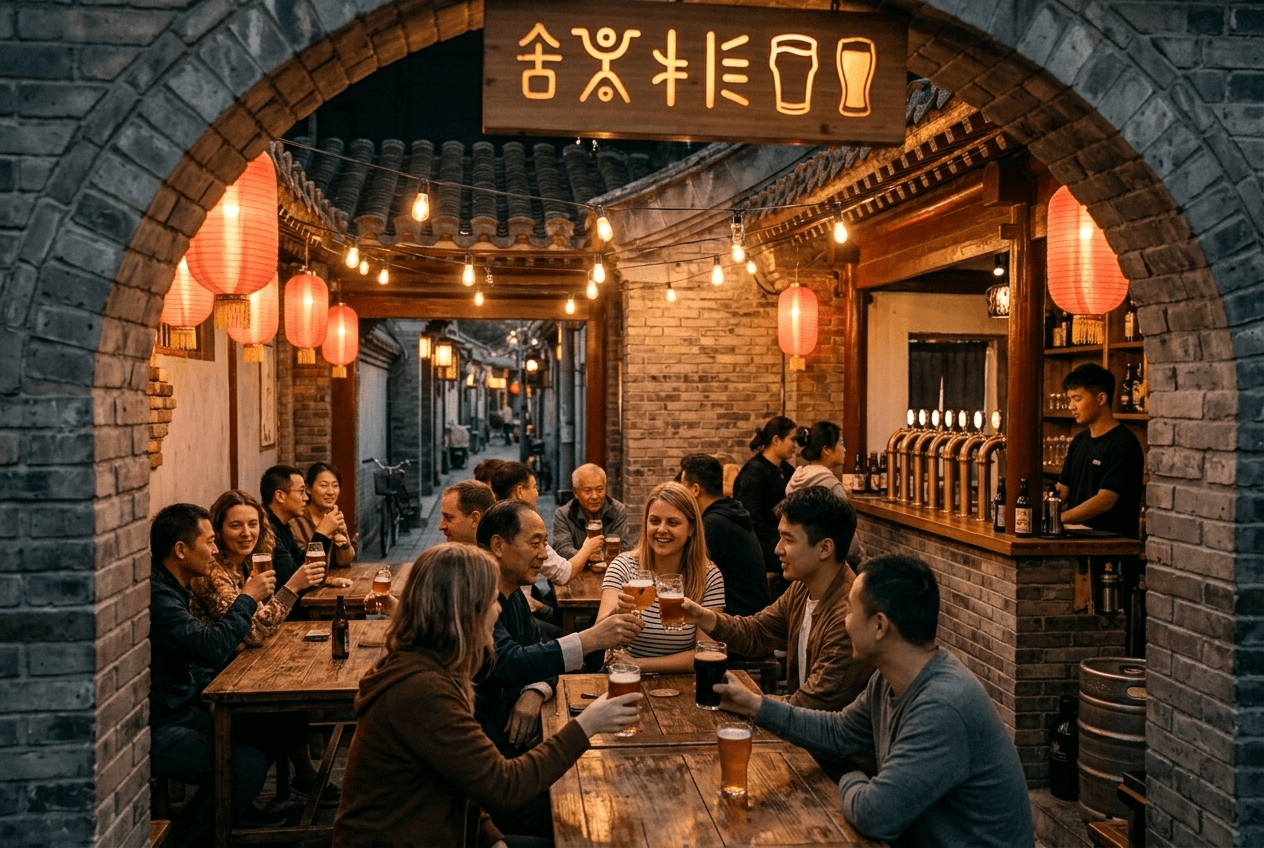
Hutong Craft Beer Crawl
Hop between hidden hutong breweries — Beijing's booming craft beer scene meets ancient alleyways.
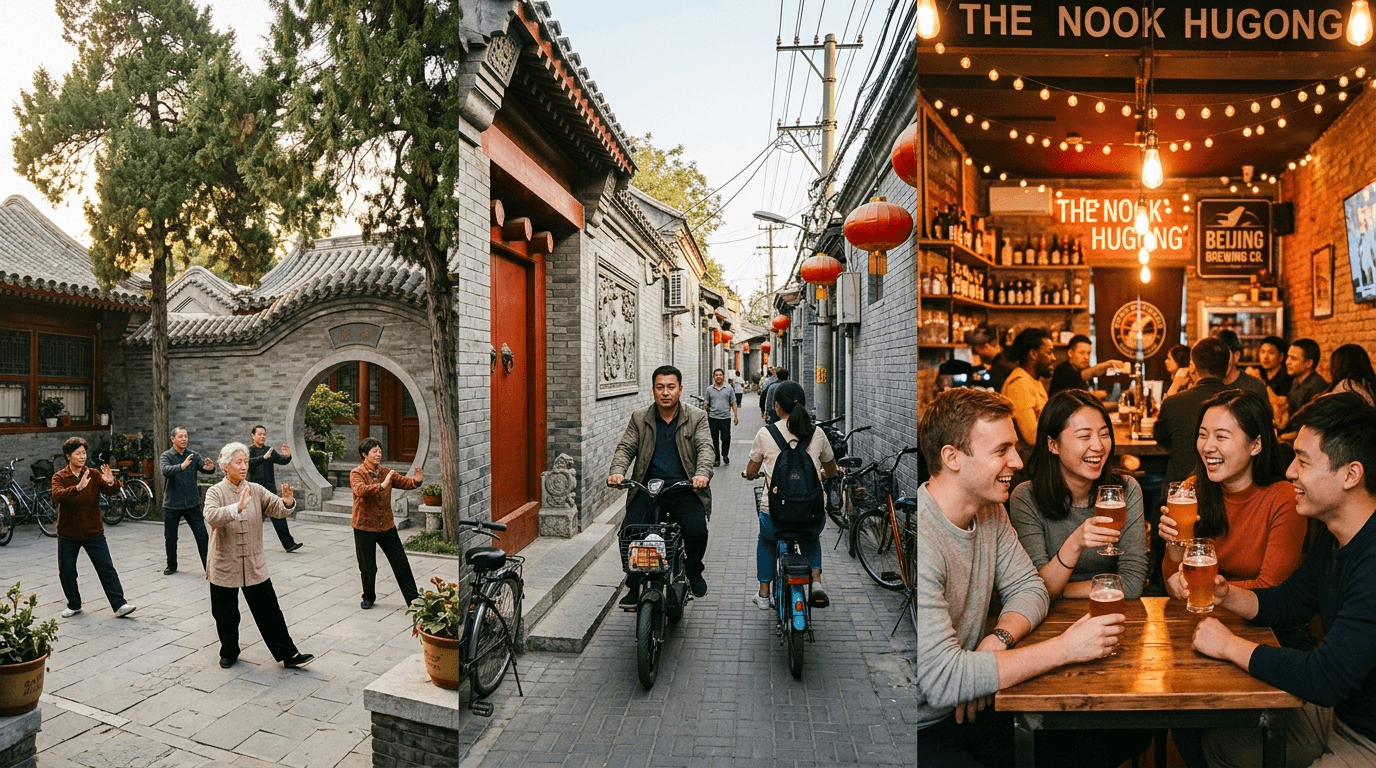
Live Like a Local — Full Day
A full day with a local: tai chi, street breakfast, hutong e-bike, hidden restaurants, craft beer, and livehouse.
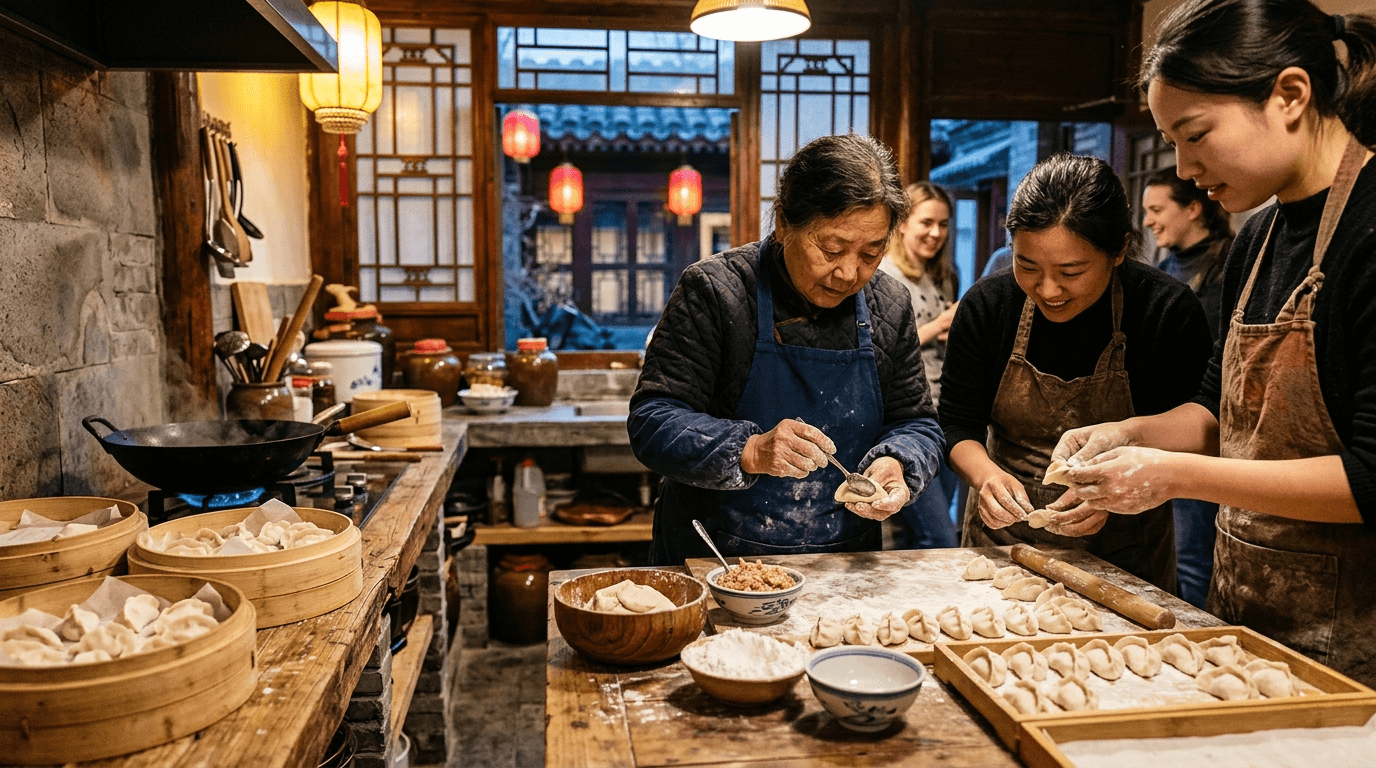
Dumpling Making Class
Learn to make 饺子 with a local family in their home kitchen — the most loved cultural experience in Beijing.
Before you fly: every foreign traveler needs a China Arrival Card. If you don't qualify for visa-free entry, see the COVA visa application guide.
Ready to experience Hutong E-Bike Tour?
A local companion will handle everything — you just show up and enjoy.
Book Now